Social media marketing proposal that wins

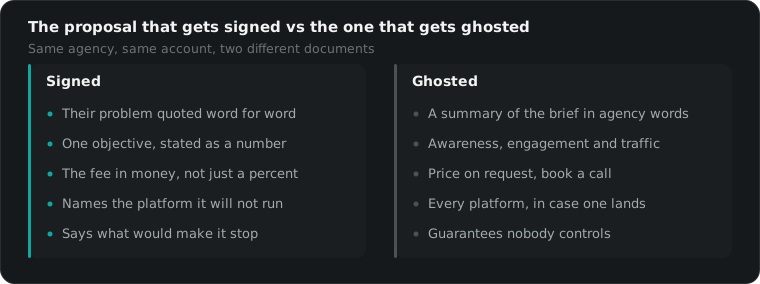
A social media marketing proposal needs 7 sections: the problem in the client's own words, the objective as a number, the channel plan, the creative plan, the measurement plan, the fee, and the terms. 8 pages is enough. 30 pages usually means you are selling paper instead of results.
A social media marketing proposal is written for the person who already likes you and read by the person who signs the cheque. Those are rarely the same person. That gap is where good agencies lose work to worse ones.
I have written a lot of these and lost plenty. The ones that got signed were consistently shorter than the ones that did not. Below is the social media marketing proposal structure I use now, and the reasoning behind each section, because copying the shape without the reasoning gets you a nice looking document that still loses.
What goes in a social media marketing proposal?
Seven sections, in this order: the problem in the client’s own words, the objective as a number, the channel plan, the creative plan, the measurement plan, the fee, and the terms. The order matters, because it moves the reader from their problem to your fee rather than from your credentials to their budget.
- The problem, in their own words. Not a summary. The actual sentence they said on the call. “Our cost per purchase went from 40 riyals to 95 in March and nobody can tell us why.” Quoted back, it proves you listened, and it sets the standard the rest of the document has to meet.
- The objective, as a number. One number. What a customer is allowed to cost, or how many leads a month at what price. Not “grow engagement”.
- The channel plan. Which platforms, and one line on what each is for. Crucially, name the platform you are not going to run, and say why.
- The creative plan. How many assets a month, who makes them, and what happens when the person who makes them goes on leave.
- The measurement plan. What tracking exists today, what is broken, and who fixes it.
- The fee. In money, not in percentages alone.
- The terms. Notice period, account ownership, what leaves with you.
Why does the objective have to be a number?
The objective section of a social media marketing proposal is where most of them quietly give up. “Increase brand awareness and drive qualified traffic” commits to nothing, so it can never be missed, which also means it can never be met.
A real objective starts with the client’s margin. If they make $60 gross on an order, a customer cannot cost $80. That single sentence is the whole plan, and half the time the client cannot tell you the number. When that happens, say so in the proposal and make finding it deliverable one. It is more useful than anything you were going to write about content pillars.
Then state what you will not chase. Reach, impressions, follower growth and video views are diagnostic numbers. They explain results. They are not results.
What should the fee section say?
Say the price. A social media marketing proposal without a number asks the reader to book another meeting just to find out whether you are affordable, and most of them will not bother. Name the model, name the monthly figure in real money, and show what the percentage works out to on their spend.
| Fee model | Typical cost | Where it breaks |
|---|---|---|
| Flat retainer | $2,000 to $10,000 a month | The agency has no reason to grow the account, and quietly caps effort |
| Percentage of ad spend | 10 to 20 percent | The agency earns more for spending more, whatever it returns |
| Flat floor, then stepped percentage | Flat under a threshold, rate falls as spend grows | Harder to explain, but honest at both ends |
| Performance only | A share of tracked revenue | Only works when attribution is clean, which on social it almost never is |
Whichever model you pick, show the arithmetic. Ten percent sounds small until it is $4,000 a month on $40,000 of spend, and the client works that out later, on their own, in a worse mood.
We publish our pricing in full before anyone gets on a call, including what each percentage costs in real money. It loses us some meetings. The meetings it loses were never going to close.
How long should a social media marketing proposal be?
About eight pages. The proposal is not the sale. The call is the sale. The document exists so that in month four, when someone asks why TikTok is not in the mix, both sides can point at the same paragraph.
Thirty page decks are usually doing one of two jobs. Justifying a fee that the work will not justify on its own, or hiding the fact that nobody has decided anything yet. Buyers who have been through a few agency relationships read them exactly that way.
The one thing worth adding length for is a worked example. One month of the plan, with real numbers, showing what gets spent, what it should return, and what you would change if it does not. That page gets read twice.
Ad account ownership and the notice period
Two clauses decide what happens when the relationship ends, and most proposals skip both. The brand must own the ad accounts, with the agency holding partner access. And the notice period has to cover media commitments as well as the fee, because media commitments bind on a different clock.
Who owns the ad account. The brand does. The agency takes partner access to the brand’s own Meta Business Manager and Google Ads account. Google’s documentation on manager accounts covers how the linking works, and it is worth reading before you sign anything. If an agency insists on running your budget inside their own account, you lose the entire conversion history the day you leave. That history is what the bidding models are trained on, so you are not just losing a spreadsheet, you are resetting the learning.
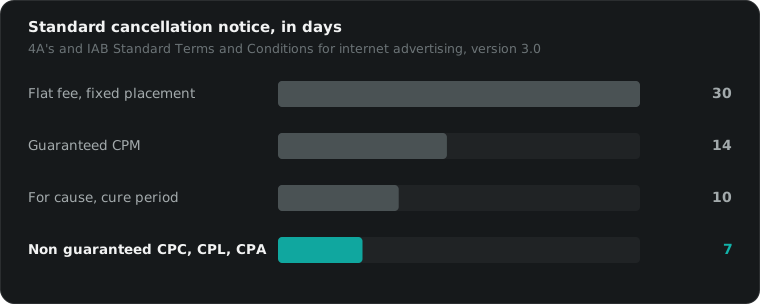
What the notice period actually covers. Thirty days on the fee is standard. Media commitments are a separate thing, and they bind harder. The 4A’s and IAB standard terms and conditions, version 3.0, set out the norms the whole industry drafts against: seven days notice on non guaranteed buys priced by click, lead or action, fourteen days on guaranteed CPM, and thirty days on flat fee fixed placements. If your proposal promises a client they can stop next week, and you have signed a fixed placement, you own the gap.
What kills a proposal after the meeting?
Three things kill a social media marketing proposal after the room empties. Silence, because you sent the document with no next step and no date. A guarantee, because nobody controls the auction or the client’s landing page. And a fee buried inside the ad spend, so the client cannot see what they paid you.
Silence. You sent the document and waited. Send it with a specific next step and a date attached, and make the date close.
A guarantee. Nobody controls the auction, the client’s landing page, or a competitor deciding to discount. Promise process instead: concepts per month, review cadence, the number that triggers a stop, the report and the day it arrives. Those you can actually keep.
And the fee buried inside spend. If the client cannot separate what went to the platforms from what went to you, they will assume the worst when results dip. They always do.
What we put in ours
Our social media marketing proposal runs seven pages, and the price is on the website before we send it. The objective section names the cost per customer we aim at, and the number that would make us tell you to stop. The measurement section says that Meta’s reported purchases and your back office will not match.
It says roughly by how much, too. Putting that in month one is information. Putting it in month three is an excuse.
If you want the wider planning context, we have written up how to write a digital marketing plan, which is the document a proposal should sit inside, and media buying, which is the work the proposal is actually selling.
Below roughly $5,000 a month in ad spend, no social media marketing proposal is worth signing, including ours. There is not enough data for anyone to optimise against and the fee makes the arithmetic worse. Above that, 15 minutes is usually enough to tell whether a proposal is worth writing at all.
Questions people actually ask
What should a social media marketing proposal include?
Seven things: the client's problem quoted back in their own words, one objective expressed as a number, the channel plan with a reason for every platform, the creative volume and who produces it, the measurement plan including what is currently broken, the fee in real money, and the terms. Anything else is decoration.
How long should a social media marketing proposal be?
Around eight pages. The proposal is not the sale, the call is. What the document has to do is record what was agreed clearly enough that in month four both sides can point at the same page. Thirty page decks exist to justify a fee, and experienced buyers read them that way.
Should the proposal name a price or wait for a call?
Name it. A proposal without a number forces the reader to schedule another meeting to find out if you are affordable, and most of them will not bother. We publish our pricing before anyone speaks to us. It filters out the wrong accounts before either side spends an hour.
Who should own the ad account, the brand or the agency?
The brand, always. The agency gets partner access to the brand's own Meta Business Manager and Google Ads account. If the agency runs your budget inside their account, you lose every conversion record the day the relationship ends, and that history is what the bidding models are trained on.
What is a fair notice period in a social media proposal?
Thirty days on the fee is normal and reasonable. The part people forget is the media itself. The 4A's and IAB standard terms allow seven days notice on non guaranteed buys priced on clicks or actions, fourteen days on guaranteed CPM, and thirty days on fixed placements. Match your terms to that.
Should a proposal guarantee results?
No, and be direct about why. Nobody controls the auction, the client's website, or their pricing against a competitor. What you can commit to is process: how many creative concepts a month, how often budget gets reviewed, what triggers a stop, and what report lands and when. Commit to those in writing instead.